







Why Japanese Homes Use Room Shoes, and How to Choose a Pair
Japanese room shoes are indoor slippers or booties designed to be worn in the home or a shared public space in order to keep indoor spaces clean. They are often called Japanese house slippers. Japanese etiquette mandates that visitors remove their shoes when entering private homes and some public buildings, especially where the floors may have delicate rugs, polished wood floors, or tatami flooring. Their purpose is both practical and cultural: keeping separate shoes for indoor and outdoor use avoids tracking dirt and pollutants into the home, and shows respect for the private sphere of the home. This practice keeps indoor spaces untainted from the outside world, allowing the visitor to leave their worries outside to settle into the comfortable, peaceful stillness of the home.

A Short History of Japanese House Slippers
The first Japanese house slippers appeared in the early Meiji era (1868 to 1912), as more foreign visitors and residents arrived in Japan. At the time, Japanese homes featured tatami flooring made of rice straw and woven rush grass, materials which were easily stained or damaged. The custom of removing outdoor shoes at the door is much older, going back more than a thousand years to homes built with raised wooden floors. People did not wear any footwear at all inside a tatami room, walking in with bare feet or tabi socks to protect the mats.
However, Western visitors would wear their shoes inside homes and ryokan (traditional Japanese inns), risking severe damage to the delicate tatami mats. Residents of Yokohama’s foreign settlement ordered a solution from Tokyo craftsman Tokuno Risaburō: what became Japan’s first slippers, worn over their shoes to protect the floors. From there, the room shoe was born. Rooted in the history of Japanese hospitality, room shoes thus became a way to welcome visitors to the home and show respect for their company.
What Makes Japanese Room Shoes Different?
Unlike Western slippers (which are only worn inside one’s own home), Japanese room shoes can be worn in any intimate indoor space, whether it be a friend’s home or a traditional inn. A quality room shoe will keep indoor spaces clean, protect the floors, and avoid tracking the dirt that everyday shoes pick up. Room shoes should also be snug and comfortable on the feet, because although they serve a utilitarian purpose, they should ultimately be a pleasure to wear.

There are many kinds of room shoes, from cozy slipper styles to casual slides usually worn in bath houses. Uwabaki (上履き, “indoor shoes”) are a related style: the canvas ballet flat-style shoes worn by students inside Japanese schools, a practical pair they change into when they arrive each morning. Picking the right room shoe for you depends on the environment and its function, as well as your personal preference for comfort, breathability, or stability.
When you enter a Japanese home, chances are you will find pairs of room shoes set aside for visitors. The first thing you will see is a genkan, a kind of entrance that marks the border between the home and the outdoors. The genkan is typically divided into a lower area where people take off and store their shoes, and an elevated zone that is usually covered by a different type of flooring. This marks the beginning of the indoor living space, the boundary where the room shoe must be worn. As a visitor you show respect for your host by removing your shoes, doing your part to keep impurities outside of the home. This custom helps uphold the symbolic barrier between indoor and outdoor spaces that is deeply important in Japanese culture.
Japanese Slipper Etiquette: Genkan, Tatami and Toilet Slippers
Cultural etiquette requires visitors to remove their shoes when entering a Japanese home, and in many traditional places such as ryokan and temples. Some families will have extra room shoes for guests conveniently placed by the doorway. When visiting a household, follow this simple rule: if the shoe has touched the street, it’s best left at the genkan. Ryokan and some temples provide slippers at the entrance, and visitors store their own shoes in small cubbies (geta-bako). Consider also wearing high-quality socks as a sign of respect when visiting spaces where you’ll need to remove your shoes.
Depending on the room you are entering, you may require different kinds of room shoes. Indoor spaces with wooden flooring are suitable for room shoes. Tatami straw mats, for example, can be delicate and scratch easily so slippers come off at the edge of a tatami room and only socks are worn on the mats.
Toilet slippers are plastic or rubber slides that are designed to be worn exclusively in the restroom. They are kept separately lined up outside the washroom: it is customary to slide out of your room shoes into toilet slippers when entering the washroom, and put your room shoes back on after you are finished. Wearing these slippers anywhere else in the house is considered a major faux-pas, stemming from deep cultural ideas about hygiene and contamination.
How to Choose Japanese House Shoes
When selecting the right room shoes for you, the factors to consider span material, environment, function, and personal preference. Here are some features to look for as you search for your perfect pair.
Fabric & Materials
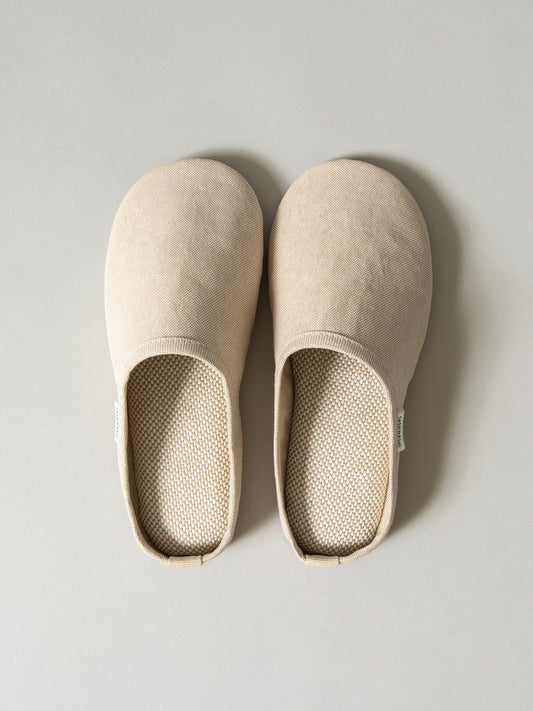
Seek out breathable, natural-leaning materials like cotton or wool, which offer comfort, durability, and warmth. These fibers, along with washi paper fabric, work best for the upper and the lining, where they touch your feet. Underneath, look for a soft, lightweight sole made for indoor floors, such as a suede-like sole that grips gently and protects wood floors from scuffs and scratches.

Room Shoes for Winter and Summer
You may wish to wear different kinds of room shoes depending on the season. During winter, an insulated room boot made with wool or lined with fleece will help keep your feet toasty. The ABE Lined Room Bootie, made by ABE Sangyo in Kahoku, Japan, has a cozy lining and a high-cut shape that keeps feet warm while still slipping on and off easily. For wool, ABE’s Shetland Wool Lined Home Shoes pair a Shetland wool and linen outer with a soft recycled wool lining.

In the summer, breathable and lightweight room shoes made from cotton will keep your feet feeling fresh and free from moisture. For casual wear around the house, consider the Sasawashi Room Shoes, made in Osaka from Sasawashi fabric: washi paper threads woven with antibacterial kumazasa (bamboo grass) fibers that absorb moisture and odors. They are comfortable enough to wear without socks.

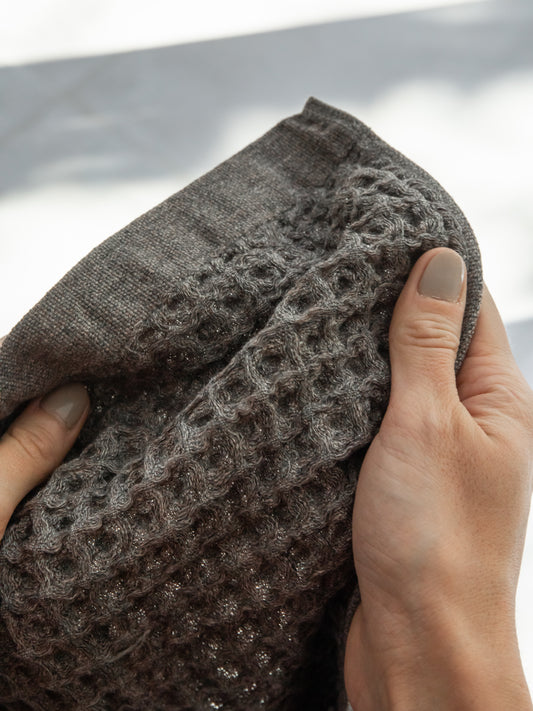
If you’re looking for a versatile room shoe you can use year-round, the Lana Room Shoes by Kontex, a textile maker in Imabari, Japan, are made of ultrasoft cotton that feels as cozy as well-loved cashmere.

Fit & Sizing
Japanese room shoes are sized by the length of your foot in centimeters rather than by US or European sizes, so a ruler is more useful than a conversion chart. Your whole foot should rest on the footbed, and if you are between sizes or have wide feet, choose the larger size.
To find your size:
- Put on the socks you usually wear around the house.
- Stand on a sheet of paper with your weight centered, and mark the tip of your longest toe and the back of your heel.
- Measure between the two marks in centimeters, then repeat with your other foot.
- Take the longer measurement and compare it with the size chart on the product page.

Taking Care of Your Room Shoes
The easier your room shoes are to wash, the longer they will last (and more enjoyable they will feel!). Choose a room shoe that can be spot-cleaned or thrown in the washing machine without much fuss. Always use a neutral detergent instead of chlorine bleach, and air-dry your shoes in the shade to avoid shrinkage or damage. Keep them for indoor floors, too: their soft soles are made for the home rather than the street.
Room Shoes vs. Uwabaki, Toilet Slippers, Tabi and Western Slippers
Japanese room shoes are one of several kinds of indoor footwear, each with its own place in the home or at school. Here is how they compare.
| Room Shoes | Uwabaki | Toilet Slippers | Tabi Socks | Western Slippers | |
|---|---|---|---|---|---|
| Fit & Style | A comfortable slip-on or bootie with a snug structure, made from breathable and lightweight materials. | Typically slip-on, canvas ballet-style with an elastic band and rubber accent whose color indicates a student’s grade. | Slip-on footwear made from plastic, often lined up on the floor outside the bathroom door. | A traditional Japanese split-toe sock typically used with thonged sandals and footwear. | A soft slip-on or moccasin style, designed above all for comfort. |
| Sole Type | Soft and lightweight, made for indoor floors only. | Rubber or PVC, designed for versatility in the classroom. | Rubber or plastic with traction. | None. | Firm but comfortable, designed for comfort and lounging inside the home. |
| Intended Environment | Worn at home, and offered to guests in homes and ryokan. | Worn as part of the school uniform during the school day. | Designed to be worn only when entering and using the restroom. | Worn indoors, including on tatami, and outdoors with traditional sandals. | Worn only at home. |
| Materials | Typically made from cotton, wool, canvas or washi paper fabric. | Canvas | Waterproof vinyl, rubber, or plastic materials that are easy to wipe clean. | Cotton. | Typically made from cotton, wool, suede, or canvas. |
| Best for | Wooden floors, carpeting, and indoor use. | School classrooms and corridors | Toilets, washrooms, or baths | Tatami mats. | Indoor flooring like wood, carpets, and tile. |
Common Questions About Japanese Room Shoes
Why Do Japanese People Wear Slippers at Home?
Japanese culture recognizes a strict physical boundary between clean indoor spaces and unclean outdoor spaces. Removing your outdoor shoes and slipping into room shoes prevents damage to the floors and keeps dirt and debris out of the house. Japanese room shoes also keep feet warm and comfortable on wooden floors, and having a pair ready for guests is a simple way to make them feel welcome.
What Are Japanese House Slippers Called?
At home, Japanese house slippers are usually called surippa (スリッパ), a word borrowed from the English “slippers.” The indoor shoes children wear at school are called uwabaki (上履き), and the plastic slippers kept by the bathroom door are toilet slippers. Outside Japan, they are often sold as room shoes or Japanese house shoes.
Where Do You Wear Room Shoes in Japan?
Wear room shoes on wooden and carpeted floors inside a Japanese home, and wherever slippers are offered at the entrance, such as ryokan and some temples. Take them off before stepping onto tatami, where only socks are worn, and switch to toilet slippers in the bathroom. Don’t forget to wear your best socks!
How Are Japanese Room Shoes Made?
Japanese room shoes are cut and sewn from materials such as cotton canvas, wool, linen and Sasawashi, a fabric woven from washi paper and kumazasa bamboo grass. ABE Sangyo, for example, has made them in Kahoku, a town in Yamagata Prefecture, since 1919, and Kahoku makes more than 40% of Japan’s room shoes. The important thing is that they feel good on your feet and are easy to keep clean.
To find a pair for your own home, browse rikumo’s collection of Japanese room shoes, made by ABE Sangyo, Sasawashi and Kontex.